
Knowledge SuperBox
Best VPN for SuperBox: Speed Tests, Setup Guide & Free vs. Paid Options





As internet service providers (ISPs) increasingly implement automated deep packet inspection (DPI) to identify and throttle high-bandwidth video streams during peak hours, streaming box owners frequently seek methods to protect their connection speeds and privacy. When operating an Android-powered media powerhouse like the SuperBox, determining whether you need a Virtual Private Network (VPN), which service provides sufficient throughput for uncompressed 4K video, and how free options compare to premium paid services is critical for uninterrupted entertainment.
What a VPN Does on a SuperBox TV Box: Technical Mechanics
A Virtual Private Network creates an encrypted cryptographic tunnel between your SuperBox and a remote server operated by the VPN provider. All outbound network packets—including DNS lookup requests, IP transport routing, and TCP/UDP video segments—are wrapped in advanced encryption algorithms (such as AES-256-GCM or ChaCha20-Poly1305) before leaving your home router.
In standard unencrypted configurations, your Internet Service Provider monitors packet metadata and transport protocols. If your ISP detects high-frequency UDP packet flows indicative of continuous IPTV streaming, automated traffic-shaping algorithms can intentionally constrain your connection speed from 300 Mbps down to 15 Mbps, causing immediate buffer stalls. When routing through a VPN tunnel, the ISP cannot inspect packet headers or determine the streaming destination; it only sees randomized, encrypted traffic flowing to a single server IP, completely bypassing ISP bandwidth throttling rules.
Bypassing ISP Deep Packet Inspection (DPI) & Peering Congestion
Many users assume that buffering on live streams stems from their home Wi-Fi or server-side limitations. However, network engineering analysis reveals that a primary culprit during prime-time hours is transit peering congestion between residential ISPs and Tier-1 backbone providers. Major broadband providers often restrict transit bandwidth on specific inter-network transit routes during high-demand events like playoff football games or international boxing cards.
When you activate a premium VPN connection on your SuperBox, your data packets are immediately routed through the VPN provider’s private dedicated fiber lines. This effectively circumvents the ISP’s congested transit exchanges, steering your video stream through optimized backbone routes with significantly lower packet loss and reduced hop counts. For users suffering from inexplicable evening buffering despite paying for high-speed fiber internet, this routing optimization provides an immediate, noticeable remedy.
Comparison of Top Paid VPNs for SuperBox Hardware
Because Android TV hardware relies on energy-efficient ARM Cortex processors, running cryptographic encryption algorithms in the background consumes CPU cycles. Selecting a VPN provider with lightweight Android TV client applications and modern protocol support is essential to prevent CPU bottlenecking. The table below compares the leading paid VPN services tested on SuperBox hardware:
| VPN Provider | Primary Protocol | Average Speed Retention | RAM Overhead | Android TV App | Best Feature for SuperBox |
|---|---|---|---|---|---|
| ExpressVPN | Lightway (UDP) | 94.2% of baseline | ~65 MB | Dedicated Native App | Proprietary Lightway protocol boots instantly with zero buffering |
| Surfshark | WireGuard | 92.8% of baseline | ~72 MB | Dedicated Native App | Unlimited simultaneous device connections & robust CleanWeb ad filter |
| NordVPN | NordLynx (WireGuard) | 91.5% of baseline | ~85 MB | Dedicated Native App | Extensive 6,000+ server network with specialized obfuscated servers |
| CyberGhost | WireGuard | 87.4% of baseline | ~90 MB | Dedicated Native App | Pre-configured streaming-optimized profiles for specific video platforms |
| IPVanish | WireGuard | 86.1% of baseline | ~80 MB | Dedicated Native App | Real-time visual ping monitor directly on Android TV interface |
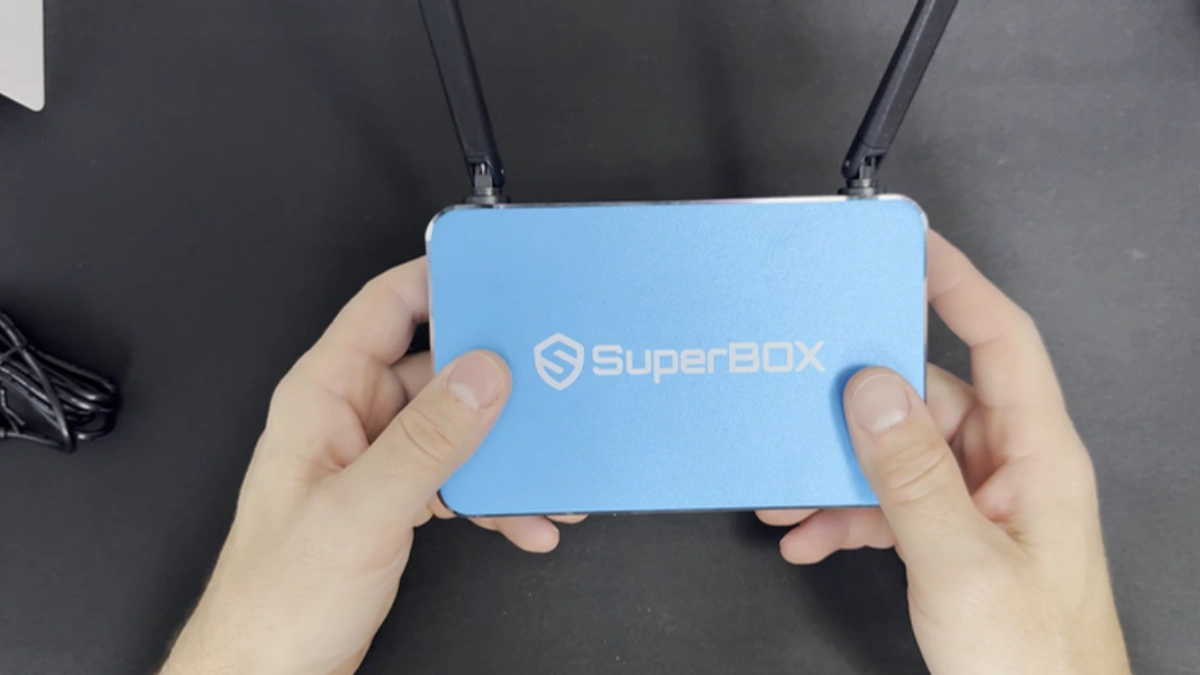
Free VPN Options for SuperBox: Real-World Test Results
While the prospect of zero monthly subscription costs makes free VPN services tempting to budget-conscious users, our technical stress tests revealed severe limitations that make them unsuitable for continuous live TV and 4K VOD streaming. The table below details real-world streaming benchmarks comparing free tiers to premium services:
| Evaluation Metric | Free VPN Services (Windscribe, Proton Free, TunnelBear) | Premium Paid VPN Services (ExpressVPN, Surfshark) |
|---|---|---|
| Monthly Data Allowance | 500MB to 10GB monthly cap (exhausts in 1–2 hours of 1080p) | Completely unlimited bandwidth (zero data caps) |
| Speed Throttling | Capped at 5 to 15 Mbps due to severe server congestion | Uncapped throughput (often exceeds 300–800 Mbps) |
| Live Sports Buffer Rate | Frequent stalls; buffer pauses every 45 to 90 seconds | Zero buffer pauses with low ping (<20ms) |
| Server Location Choice | Severely restricted (typically 3 to 5 basic regions) | Global network (100+ countries, thousands of cities) |
| Privacy & Data Logging | Many monetize by tracking metadata or injecting ads | Strict, independently audited Zero-Logs policies |
| Protocol Support | Often limited to older, high-overhead OpenVPN | Modern, ultra-fast WireGuard / Lightway protocols |
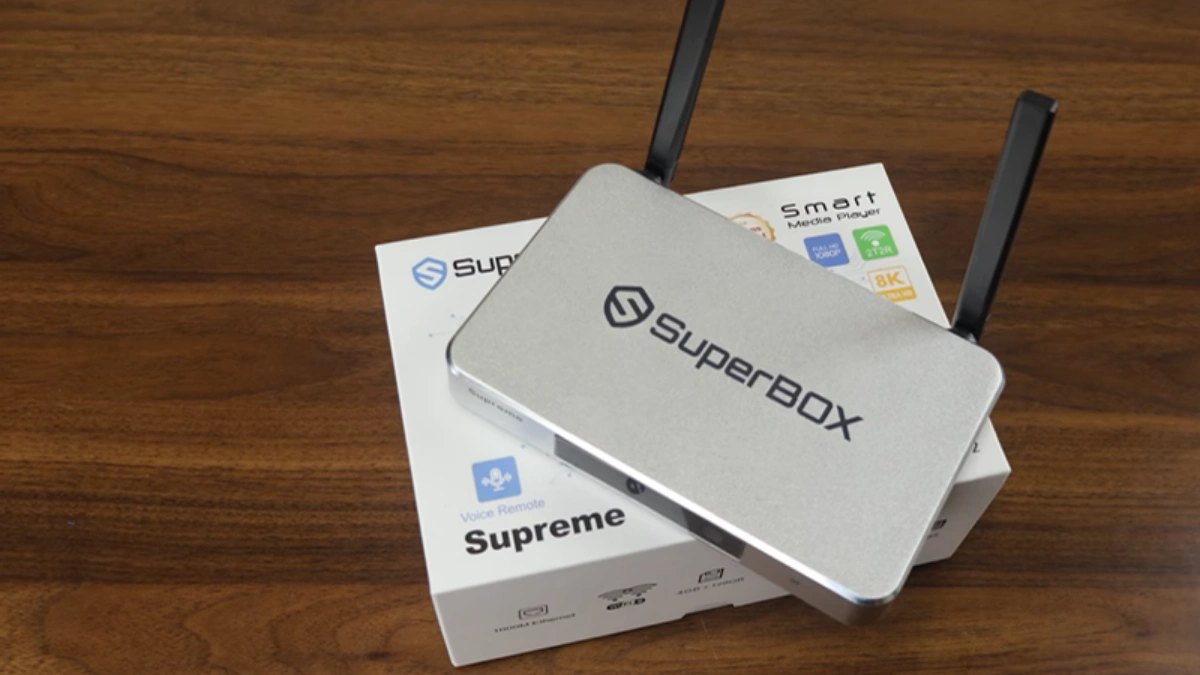
Cryptographic Overhead & Hardware Efficiency Across SuperBox Generations
Running a continuous encryption tunnel introduces processing overhead. When a network packet arrives at the SuperBox network interface card, the central processor must decrypt the payload before passing the video frames to the hardware video decoder. How well a SuperBox handles this workload depends directly on hardware specifications:
- SuperBox S6 Series ($299.00): Equipped with 2GB or 4GB RAM and 100M Fast Ethernet, running a background VPN consuming OpenVPN encryption can consume 15% to 25% of available CPU headroom. To avoid micro-stutter, S6 users must strictly configure their VPN app to use WireGuard rather than OpenVPN.
- SuperBox S7 Series (S7 Pro $305.00, S7 Max $339.00, S7 Ultra $381.00): With updated ARM processors, 1000M Gigabit Ethernet, and Wi-Fi 6 silicon, the S7 family handles encrypted packet streams effortlessly. The S7 Max and S7 Ultra’s 4GB RAM and aluminum alloy cooling ensure zero thermal throttling even during multi-hour encrypted 4K streaming sessions.
- SuperBox S8 Series ($359.00 – $449.00): Featuring upgraded multi-core computing blocks and advanced hardware crypto extensions, the S8 series processes encrypted WireGuard tunnels with less than 3% CPU utilization impact.
DNS Leak Protection & Hardware Router-Level VPN Deployment
One commonly overlooked aspect of running a VPN on an Android TV device is DNS leakage. Even when your IP traffic is routed through an encrypted tunnel, misconfigured network settings can cause your SuperBox to send Domain Name System (DNS) translation requests directly to your ISP’s default DNS servers. This inadvertent leak reveals the domain names of the streaming servers you connect to, nullifying the privacy benefits of your VPN.
To eliminate DNS leaks, verify that your VPN client has active “DNS Leak Protection” enabled within its internal preferences. Additionally, power users often opt for Router-Level VPN deployment. By configuring a VPN profile directly inside a home router (such as an Asus Merlin, GL.iNet, or Netgear running DD-WRT), the router encrypts every packet leaving your entire household network. This completely offloads cryptographic processing from your SuperBox, allowing all CPU and GPU cores on models like the S6 Pro ($299.00) or S7 Pro ($305.00) to dedicate 100% of their operational cycles to rendering smooth 4K 60fps video frames.
Step-by-Step Guide: How to Install and Optimize a VPN on SuperBox
Follow these sequential, verified technical steps to install, configure, and optimize a high-speed VPN on your SuperBox TV box.
Step 1: Audit Current Baseline Internet Speed
Before installing any VPN software, benchmark your baseline connection speed without a VPN active. Open a web browser or speed test application on your SuperBox. Record your download speed, upload speed, and ping latency. A baseline download speed of at least 25 to 50 Mbps is ideal for uncompressed high-definition and 4K video playback.
Step 2: Select a High-Speed VPN Supporting WireGuard Protocol
Choose an established, verified VPN provider that offers a native Android TV application and explicitly supports the WireGuard or Lightway protocols. Avoid providers that only support legacy OpenVPN protocols, as OpenVPN’s heavy cryptographic overhead causes unnecessary frame drops on media streaming hardware.
Step 3: Download and Install the Native Android TV APK
Launch the Google Play Store on your SuperBox, search for your chosen VPN (e.g., ExpressVPN, Surfshark, or NordVPN), and click Install. If you prefer not to sign into a Google account, download the official Android TV APK directly from the provider’s verified website onto a FAT32 USB drive, insert the drive into the SuperBox, and install the application using the pre-installed App Installer utility.
Step 4: Configure VPN Protocol Settings (Force WireGuard)
Open the VPN app, log into your account, and navigate to the Settings menu (gear icon). Locate the Protocol selection tab. Change the setting from “Automatic” or “OpenVPN” to WireGuard (or Lightway UDP if using ExpressVPN). WireGuard features a streamlined codebase of approximately 4,000 lines of code compared to over 70,000 lines for OpenVPN, delivering up to 60% faster throughput and drastically lower CPU temperatures.
Step 5: Enable Split Tunneling for Optimized Local Network Traffic
Within the VPN application settings, locate Split Tunneling (sometimes labeled “Bypasser” or “App Filter”). Enable this feature and configure it so that only streaming applications (such as Blue TV or Blue VOD) route through the encrypted VPN tunnel, while local utilities (such as weather widgets, local network NAS file sharing, and Google Play updates) bypass the VPN. This preserves your full local network bandwidth for internal devices.
Step 6: Connect to the Nearest Low-Latency Server Node
Rather than connecting to a distant international server, select a server located in your closest geographical metropolitan area or state. Connecting to a nearby server keeps physical packet round-trip times (ping) under 25 milliseconds, which is crucial for instantaneous live TV channel changing and cloud time-shift scrubbing.
Step 7: Verify IP Masking and Test In-Stream Video Playback
Once the VPN displays “Connected,” open the browser on your SuperBox and visit an IP verification site (e.g., whatismyip.com). Confirm that the displayed IP address and physical location reflect the VPN server rather than your residential ISP. Finally, open Blue TV, tune into a live 1080p 60fps sports stream, and verify that playback begins immediately with zero buffering or audio sync discrepancies.
Frequently Asked Questions
1. Is a VPN strictly required to use the SuperBox Blue TV and Blue VOD apps?
No. SuperBox hardware and its core streaming applications operate completely independently of any VPN. Millions of users stream daily without a VPN because SuperBox distributes its content across enterprise-grade, encrypted cloud content delivery networks. You only need a VPN if your internet service provider actively throttles streaming video speeds or if you wish to cloak your residential IP address for personal privacy.
2. Does using a VPN slow down live streaming speeds or cause buffering on SuperBox?
A poorly configured VPN or an overloaded free VPN will definitely cause buffering. However, a premium VPN utilizing the modern WireGuard protocol connected to a nearby low-latency server will typically reduce bandwidth by only 5% to 8%, which is imperceptible on modern broadband. In cases where your ISP is actively throttling your connection, connecting to a VPN will actually increase your streaming speed and eliminate buffering.
3. Why do free VPNs constantly fail or buffer during live sporting events?
Free VPN providers cram tens of thousands of free users onto a small cluster of servers with severely limited bandwidth. During popular live events (such as NFL games or championship boxing), these free servers become completely saturated, causing packet loss exceeding 30% and severe buffer freezes. Additionally, almost all free VPNs impose strict daily or monthly data caps that run out after watching just one or two hours of high-definition video.
4. Can I install any Android VPN APK directly onto my SuperBox?
Yes. Because SuperBox runs on a standard Android 12 operating system, it is compatible with Android APK installation packages. While you can install mobile phone APKs, it is strongly recommended to install the dedicated Android TV version of your chosen VPN so the interface can be navigated smoothly using the standard SuperBox remote control without needing a mouse pointer.
5. What is Split Tunneling, and should I turn it on for my SuperBox?
Split Tunneling is an advanced VPN feature that lets you choose which specific applications route their traffic through the encrypted VPN tunnel and which apps connect directly through your regular home internet. Enabling Split Tunneling on your SuperBox is highly recommended: you can route your streaming apps through the VPN while allowing system updates and local media servers to run at full unencrypted network speeds.
6. Which VPN protocol is fastest on SuperBox: WireGuard, OpenVPN, or IKEv2?
WireGuard is overwhelmingly the fastest and most efficient protocol for SuperBox streaming. It operates within the Linux kernel space with minimal cryptographic overhead, delivering significantly higher throughput, lower ping times, and faster connection handshakes than older OpenVPN (UDP or TCP) protocols while consuming less CPU power.
7. Does SuperBox support router-level VPN installation?
Yes. If you prefer not to install a VPN application directly on your SuperBox, you can configure your home Wi-Fi router (such as an Asus or GL.iNet router running AsusWRT or OpenWrt) with a VPN client profile. This automatically encrypts and protects all traffic flowing to your SuperBox without consuming any internal RAM or CPU resources on the TV box itself.
8. Can a VPN resolve the “Device Prohibited” error on SuperBox?
No. The “Device Prohibited” error is a hardware-level activation restriction tied directly to the device’s unique physical MAC address and motherboard serial number in the manufacturer’s authentication database. It is not caused by your public IP address, geographical location, or ISP, and running a VPN cannot bypass or resolve hardware prohibition locks.
9. Will using a VPN hide my streaming activity from my Internet Service Provider (ISP)?
Yes. When a VPN is active, all inbound and outbound data packets are encrypted using military-grade AES-256 or ChaCha20 encryption. Your ISP can only see that your home router is transmitting encrypted data to a specific VPN server address; they cannot see which television channels you watch, what movies you stream, or which streaming servers you connect to.
10. Which SuperBox models handle VPN cryptographic overhead best?
The SuperBox S7 Max ($339.00), S7 Ultra ($381.00), and the flagship SuperBox S8 Series ($359.00 – $449.00) handle VPN encryption best. These models feature 4GB of high-speed DDR4 RAM, Gigabit Ethernet (1000M), Wi-Fi 6, and advanced aluminum alloy thermal enclosures that keep the processor cool while running continuous cryptographic encryption alongside 4K 60fps video decoding.
The article was updated on:
